

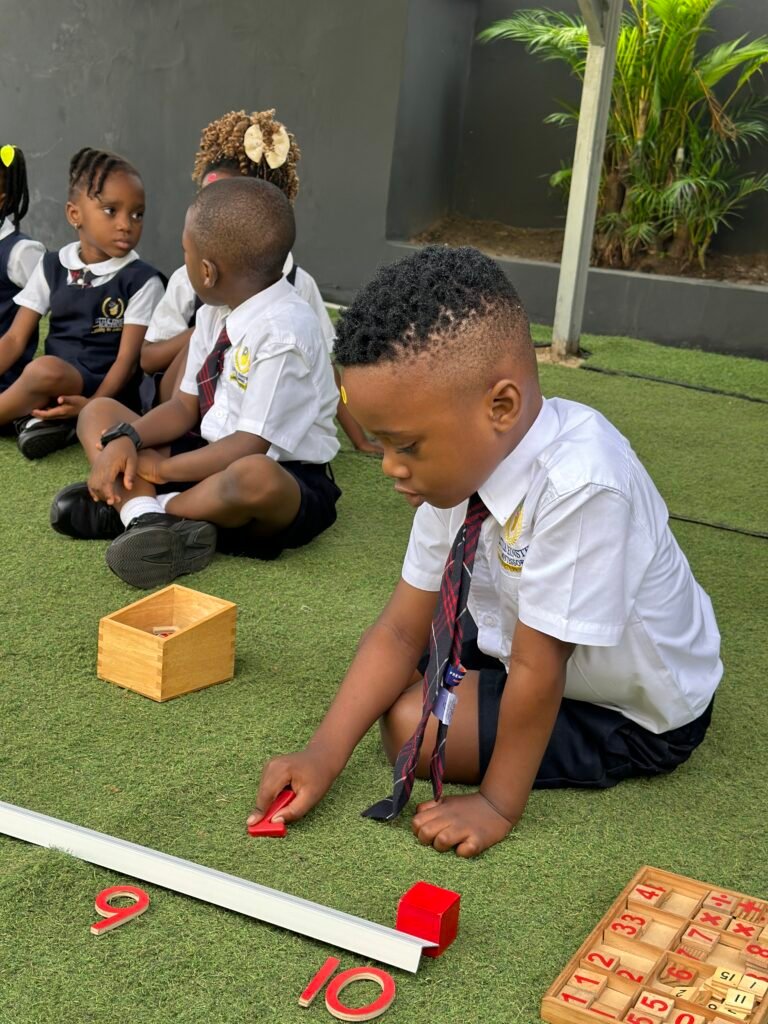
Practical life
Pouring, buttoning, sweeping, preparing food: everyday tasks that build coordination, concentration and independence.
Now enrolling Admissions open for the 2026/2027 academic session Start your application
Little Einstein Montessori Academy
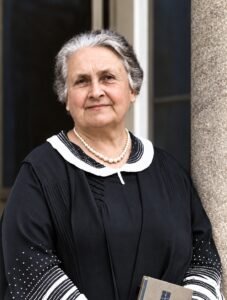
An approach to education, developed by Dr Maria Montessori, that trusts children as natural learners and gives them the environment, materials and guidance to thrive.
Children are not empty vessels. They are explorers.
In a Montessori classroom you will not see rows of desks facing a board. You will see children choosing purposeful work, concentrating deeply, and helping one another, while the teacher moves quietly between them.
The teacher, sometimes called a guide, observes each child closely and introduces new materials at exactly the right moment. Freedom is real, but it sits within clear limits: respect for others, care for materials and completing what you begin.
“Help me to do it myself.” Children gain skills that let them act for themselves.
Learning moves from the hand to the mind through beautifully designed materials.
Orderly, child-sized spaces invite exploration and make independence possible.
Children choose their work within limits, which builds focus and motivation.
For the child as a person, and for others and the shared space.
Children care for their materials, their classroom and one another.
Real achievement, repeated until mastered, builds lasting self-belief.
Children’s questions lead the way to deeper learning.
A Montessori classroom is typically organised into five areas of learning.
Pouring, buttoning, sweeping, preparing food: everyday tasks that build coordination, concentration and independence.
Materials that refine the senses, helping children notice and name size, colour, shape, sound and texture.
Rich conversation, sounds, sandpaper letters and early reading and writing, introduced when each child is ready.
Beads, rods and counters make quantity visible, so number sense is felt before it is written.
Geography, science, nature, art and music open a window onto the wider world.
Straight answers about how Montessori works.
Children enjoy their work, but it is purposeful. Each material is designed to teach a specific skill or concept, and children repeat activities until they master them.
Choice happens within a structure. Teachers observe each child and guide them towards the next challenge, including areas they might not choose on their own.
Montessori builds the habits primary learning depends on: concentration, independence, order, early literacy and number sense, and the confidence to try.
The teacher prepares the environment, observes each child carefully, gives individual and small-group lessons, and protects the calm that allows deep concentration.
Small changes that support what your child is learning at school.
A low hook for coats, a reachable shelf for books and cups invites independence.
Let your child dress, pour or tidy by themselves, even when it takes longer.
Setting the table, watering plants and sorting laundry build capability and pride.
A small selection of open-ended toys, rotated often, encourages deeper play.
Notice what fascinates your child and give them ways to explore it further.

Visit us in Gaduwa, meet our educators and see a school day for yourself. Our admissions team will guide you through every step.